Random Number Generators (RNGs) are the backbone of fairness in online gambling. Without a certified RNG, no game can be considered legally compliant or trustworthy in regulated markets.
What Is an RNG Certificate
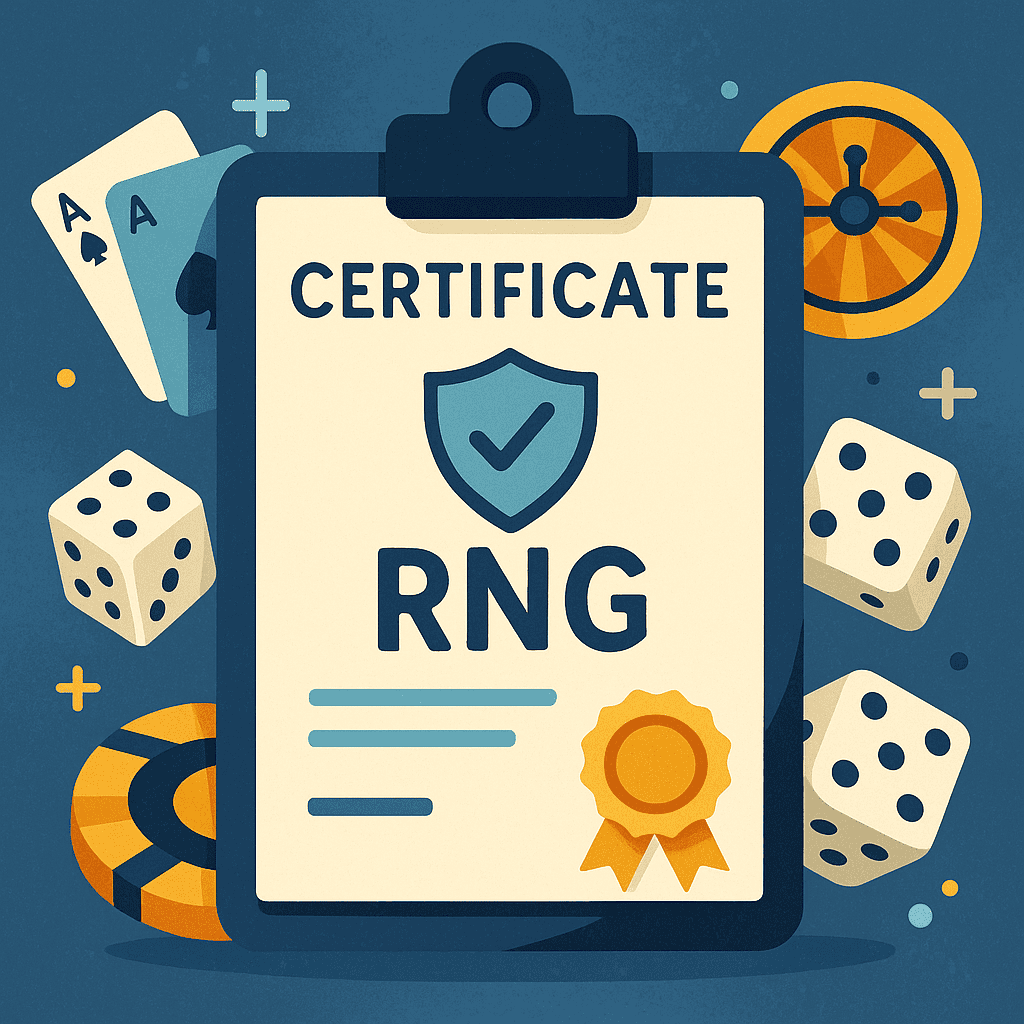
A Random Number Generator certificate is a document issued by an independent testing laboratory confirming that a gaming system generates unpredictable and statistically random results. This ensures that outcomes in slot machines, table games, or other casino software are not manipulated.
Testing labs like GLI, iTech Labs, or BMM Testlabs use complex mathematical models and statistical analysis to verify a generator’s compliance with international standards such as ISO/IEC 17025 or national regulatory rules.
Who Needs RNG Certification
The obligation to certify an RNG usually falls on the game developer, especially if the games are distributed to licensed casinos. However, operators launching exclusive content or in-house games may also require direct certification.
Jurisdictions like Malta, the Isle of Man, or Curaçao include RNG verification in their licensing process. Without it, operators cannot legally provide gambling services, and payment providers may block transactions to uncertified platforms.
Certification Process Step by Step
The certification process typically includes these key stages:
- Technical Documentation Review
Developers must submit detailed documents explaining how their RNG works, including source code samples and algorithms. - Lab Testing
The RNG is tested across thousands or millions of runs to detect patterns or biases. Labs use chi-square tests, serial correlation analysis, and other tools to verify randomness. - Integration Testing
Beyond raw number generation, labs test how the RNG integrates with game logic to confirm that no distortions occur during implementation. - Certification and Report
If the generator passes, a certificate and full audit report are issued. These can be presented to regulators or posted on casino websites for transparency.
Cost and Validity
The price of RNG certification depends on the lab, project complexity, and jurisdiction. It typically ranges from $10,000 to $25,000. Certification is usually valid for one to three years, after which retesting is required.
Some regulators also require periodic monitoring to ensure ongoing compliance, especially in high-risk jurisdictions or when significant updates to game logic occur.
Why It Cannot Be Skipped
Uncertified RNGs raise red flags with banks, licensors, and users. Casinos without proper certification face license revocation, legal consequences, and reputational damage. In markets with strict enforcement, skipping RNG certification effectively means operating illegally.
Moreover, players increasingly check for certification badges, and their absence can directly impact conversion rates and trust.
Final Thoughts
Getting an RNG certified is not just a regulatory checkbox. It is a foundation of fair play and a must-have for any online gambling business that values legitimacy and player trust.